
9/80 Work Schedule Explained: How It Works, Benefits, and Drawbacks
Most people are used to the traditional five-day, 9-to-5 workweek. However, flexible work models are becoming more common—and one option gaining steady traction is the 9/80 work schedule. This alternative arrangement allows employees to work longer days in exchange for an extra day off every other week.
In this guide, we’ll explain what a 9/80 schedule is, how it works in practice, its advantages and disadvantages, and who it tends to work best for.
What Is a 9/80 Work Schedule?
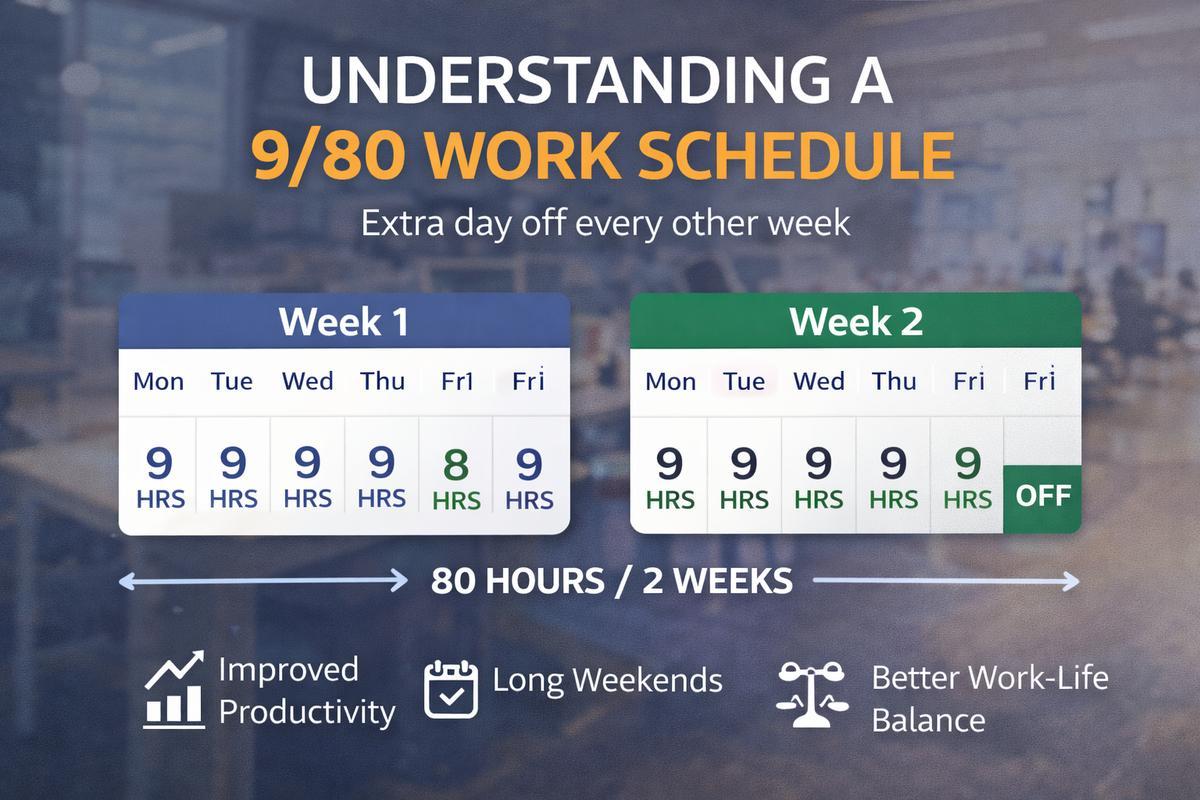
A 9/80 work schedule spreads 80 working hours across two weeks instead of the usual 40 hours each week. The structure typically looks like this:
-
Eight workdays with 9-hour shifts
-
One workday with an 8-hour shift
-
One full day off every two weeks
The goal is to maintain the same total hours while offering employees more flexibility and improved work-life balance.
How the 9/80 Schedule Works
Under a standard 9/80 arrangement, employees work longer days but gain a recurring long weekend. Most organizations structure the schedule across two weeks.
Typical Two-Week Structure
-
Week 1: Four 9-hour workdays + one 8-hour day
-
Week 2: Four 9-hour workdays + one day off
The day off is often Friday, though some companies choose Monday or rotate days to maintain coverage.
Example of a 9/80 Work Schedule
Here’s how a common 9/80 setup might look:
Week One
-
Monday–Thursday: 8:00 a.m.–12:00 p.m., 1-hour lunch, 1:00 p.m.–6:00 p.m.
-
Friday: 8:00 a.m.–12:00 p.m., 1-hour lunch, 1:00 p.m.–5:00 p.m.
Week Two
-
Monday: 8:00 a.m.–12:00 p.m., 1-hour lunch, 1:00 p.m.–5:00 p.m.
-
Tuesday–Thursday: 8:00 a.m.–12:00 p.m., 1-hour lunch, 1:00 p.m.–6:00 p.m.
-
Friday: Off
Exact hours may vary by employer, but the structure remains consistent to ensure full coverage and compliance with labor policies.
Benefits of a 9/80 Work Schedule
1. Improved Productivity
Many employees report increased motivation knowing a long weekend is coming up. Companies often see fewer unscheduled absences and improved focus during working hours.
2. Built-In Flexibility
Organizations can stagger days off across teams, ensuring business continuity while still offering flexibility to employees.
3. Reduced Commute Time
Fewer workdays mean fewer commutes. Longer days may also allow employees to avoid peak traffic hours.
4. Better Work-Life Balance
An extra day off every other week gives employees time for personal appointments, family commitments, or rest—without using vacation days.
Potential Drawbacks to Consider
1. Longer Workdays
Nine-hour shifts can feel demanding, especially in roles that require sustained concentration or physical effort.
2. Risk of Fatigue or Burnout
Without proper workload management, extended days may lead to exhaustion over time.
3. Scheduling Challenges for Small Teams
Smaller organizations may struggle to maintain coverage when employees rotate days off.
4. Reduced Focus Late in the Day
Not everyone performs well during longer shifts. Productivity may decline toward the end of extended workdays.
Frequently Asked Questions About the 9/80 Schedule
What are the main advantages of a 9/80 work schedule?
The biggest benefit is predictable flexibility. Employees enjoy regular long weekends, often leading to higher job satisfaction and fewer absences.
Who benefits most from a 9/80 schedule?
This format works well for employees who can manage longer days and value consistent time off—especially those with long commutes or personal obligations.
What are the disadvantages of a 9/80 schedule?
Some employees may find longer days tiring, and businesses with limited staffing may struggle with coverage. Fatigue can also impact performance if workloads aren’t balanced.
How can employers successfully implement a 9/80 system?
Clear communication is key. Employers should monitor workload, gather feedback, and allow some flexibility with start and end times to help teams adapt.
Final Thoughts
A 9/80 work schedule offers a structured alternative to the traditional workweek, combining longer days with more personal time. While it’s not the right fit for every role or employee, it can be a powerful tool for improving flexibility, morale, and retention when implemented thoughtfully.


