Basic Life Support certification is the quiet gateway credential of US healthcare. Nurses, EMTs, medical assistants and lifeguards all list it on their resumes, and HR systems filter candidates out when the checkbox is blank. This 2026 guide explains what BLS actually covers, how it differs from plain CPR, who really needs it, what the providers charge and — most importantly — which jobs return the investment fast.
What BLS certification is
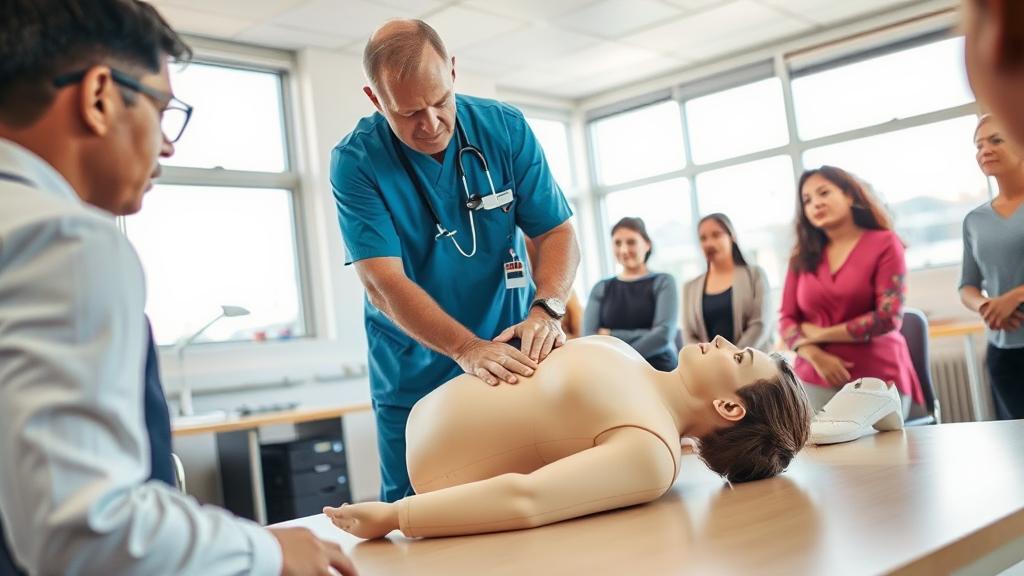
Basic Life Support is a structured short course that trains participants to recognise and respond to cardiac arrest, choking and breathing emergencies. Components include high-quality cardiopulmonary resuscitation (CPR), automated external defibrillator (AED) use, choking response for adults, children and infants, bag-valve-mask ventilation, and team-based resuscitation choreography.
A BLS card is not a medical licence. It is a credential showing that you have completed a recognised training and passed a skills and written assessment.
BLS vs CPR vs ACLS in the US
| Course | Audience | Scope | Typical duration |
|---|---|---|---|
| Heartsaver CPR/AED | Laypeople, non-medical staff | Adult CPR, AED, choking | 2.5–3 hours |
| BLS for Healthcare Providers | Nurses, EMTs, medical assistants, dental hygienists | Adult/child/infant CPR, AED, team dynamics, bag-valve-mask | 4–5 hours (initial up to 8–10) |
| ACLS (Advanced Cardiac Life Support) | RNs, paramedics, physicians | BLS skills plus rhythm recognition, drugs, airway | 12–16 hours |
Providers, costs and format
Two US providers dominate: the American Heart Association (AHA) and the American Red Cross. Most hospitals require AHA cards specifically, so verify the employer's preference before booking.
| Provider | Format | Cost |
|---|---|---|
| AHA classroom | In-person with instructor | $60–$100 |
| AHA HeartCode blended | Online theory + in-person skills | $50–$90 |
| American Red Cross | In-person or blended | $80–$120 |
| Renewal course | Shorter review + skills test | $40–$80 |
Renewal cycle
BLS cards expire every two years. Most providers recommend enrolling in the renewal course in the month before expiry to avoid a gap that could suspend clinical privileges. Renewal typically takes 2–3 hours (blended) versus 4–5 hours (in-person).
US jobs that require BLS — and how much they pay
| Role | Median annual wage | Projected job growth |
|---|---|---|
| Registered Nurse (RN) | $81,220 | +6% (faster than average) |
| Dental Hygienist | $81,400 | +7% |
| Respiratory Therapist | $61,830 | +13% (much faster than average) |
| Athletic Trainer | $53,840 | ~+14% |
| School Nurse | $52,000–$65,000 | Steady demand |
| Paramedic | $49,820 | +5% |
| Medical Assistant | $38,270 | +14% |
| EMT | $36,930 | +5% |
| CNA | $35,760 | +4% |
| Security Guard (hospital/event) | $34,750 | Steady |
| Childcare Provider | $28,520 | Positive |
| Lifeguard | $13–$18 per hour | Seasonal |
Non-healthcare roles where BLS is a differentiator
- Corporate health and safety officer.
- Gym and fitness instructor.
- Construction site safety coordinator.
- Summer camp director and counsellor.
- Airline cabin crew.
- Hotel front-of-house manager in jurisdictions requiring certified first-aid responders.
Return on investment: a quick calculator
Take a $90 AHA blended course as the reference point. An EMT entering the field at $36,930 offsets the cost in about three working days. A CNA at $35,760 offsets it in under four days. A medical assistant moving from retail into healthcare can expect a $5,000–$12,000 salary bump solely for holding a current BLS card plus a short phlebotomy certification.
Choosing between AHA and Red Cross
- AHA — the default for hospitals and the American Medical Association; required by most nursing programs.
- Red Cross — widely accepted for non-clinical roles and strong in community-based programmes; confirm with the employer.
- Neither — online-only certifications without an in-person skills test are rarely accepted by US hospitals.
Case study: a retail worker pivots to healthcare
A 27-year-old retail supervisor in Ohio earning $42,000 completed an AHA BLS course ($90, one Saturday), a phlebotomy certification ($700, two weeks) and a medical assistant programme ($3,400, eight months). She started at an outpatient clinic at $39,000 within 10 months, added a dental office per-diem role for weekends, and reached $56,000 combined within 18 months. The BLS card was the smallest line on her invoice but the first filter her new employer applied.
Common pitfalls
- Booking a fully online course that hospitals will not accept.
- Letting the card lapse — renewing after expiry can force a full initial re-take at a higher cost.
- Confusing BLS with ACLS; critical-care and ICU roles typically require both.
- Skipping practice between classes — hands-on compression depth and rate are the most commonly failed skills test items.
Frequently asked questions
Is BLS certification mandatory for all US nursing jobs?
Virtually yes — every hospital-based nursing role requires an active AHA BLS card, and many schools of nursing require it before clinical rotations begin.
How long does the course take end-to-end?
Blended format: about 2–3 hours online plus a 1.5–2-hour in-person skills session. Full classroom initial: 4–5 hours in a single day, up to 8–10 hours for first-time healthcare-provider courses.
What if I fail the skills test?
Most providers allow a retake the same day or within 30 days at no additional fee. Repeat failures require a new enrolment.
Is BLS transferable between US states?
Yes. Both AHA and Red Cross cards are accepted nationwide; state-specific add-ons (like California pediatric first-aid for some daycare roles) are separate.
Can I self-teach BLS and take only the test?
No. US providers require a supervised hands-on skills session; written-only passes are not recognised.
Conclusion
BLS certification is a $60–$120 investment that unlocks 12-plus US job categories with median wages from $35,000 to $81,000. The two-year renewal is quick and inexpensive, and the card is often the literal first filter on a hospital applicant tracking system. Compare US healthcare and adjacent roles that require BLS on ScrollJob US.