
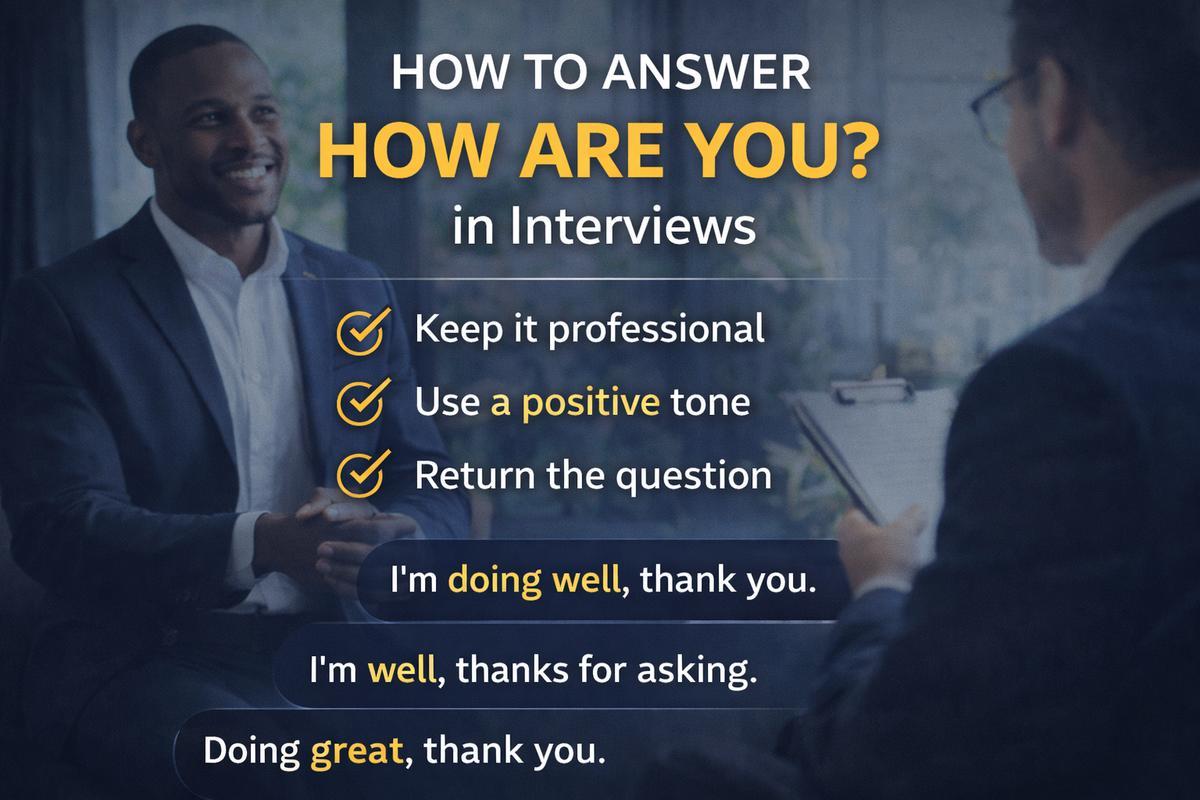
How to Answer “How Are You?” in Interviews and Professional Settings
It may sound like a simple question, but “How are you?” can carry more weight than many people realize—especially in professional situations like job interviews. Your response helps set the tone, shows emotional intelligence, and gives interviewers an early impression of how you communicate.
Knowing how to answer “How are you?” appropriately in different contexts—from interviews to networking meetings—can make your interactions feel smoother, more confident, and more professional.
Why “How Are You?” Matters in an Interview
In interviews, this question isn’t usually about your personal life. It’s a soft opener designed to:
-
Ease you into the conversation
-
Gauge your communication style
-
Assess professionalism and emotional awareness
A calm, positive response shows that you’re composed, prepared, and respectful of the setting.
Professional Responses for Interviews and Formal Situations
When speaking with recruiters, hiring managers, or people you don’t know well, it’s best to keep your answer polite, brief, and neutral.
Here are safe, professional responses that work well in interviews:
-
“I’m doing well, thank you.”
-
“I’m well, thanks for asking.”
-
“Doing great, thank you.”
-
“I’m good, I appreciate you asking.”
-
“All good, thank you.”
👉 Tip: Always follow up by returning the question:
“How are you today?”
This keeps the interaction conversational and polite.
Casual but Appropriate Responses for Informal Settings
With colleagues, networking peers, or people you already know, your response can be a bit more relaxed—while still staying professional.
Examples include:
-
“Pretty good!”
-
“Doing well, staying busy.”
-
“All right—can’t complain.”
-
“Good, thanks!”
These answers feel natural without oversharing.
What to Avoid Saying in Job Interviews
Even if you’re having a tough day, an interview is not the place to discuss personal stress, health issues, or frustrations.
Avoid responses like:
-
“Honestly, I’m stressed.”
-
“Not great, it’s been a rough week.”
-
“I’m exhausted.”
-
“Could be better.”
If you’re feeling nervous or tired, keep it professional:
“I’m doing well, thank you. I’m glad to be here today.”
How Tone and Body Language Affect Your Answer
Your tone, facial expression, and posture often matter more than the words themselves.
Tips:
-
Smile naturally
-
Maintain eye contact
-
Speak clearly and confidently
-
Keep your posture open
Even a simple response sounds more positive when delivered with confidence.
Variations of “How Are You?” and How to Respond
You won’t always hear the exact phrase. Here’s how to handle common variations:
“How’s it going?”
-
“It’s going well, thank you.”
-
“Pretty good—thanks for asking.”
“How have you been?”
(Usually implies time has passed)
-
“I’ve been doing well, thank you.”
-
“Busy, but in a good way.”
“What’s up?”
(More casual—usually not used in interviews)
-
“Not much—how about you?”
-
“All good!”
Should You Ask the Interviewer “How Are You?”
Yes—absolutely. Returning the question shows politeness, engagement, and social awareness.
Example:
“I’m doing well, thank you. How are you today?”
This small gesture helps build rapport.
Frequently Asked Questions
How should I answer “How are you?” in a job interview?
Stick to a professional, positive response such as:
“I’m doing well, thank you. How are you?”
Is it okay to be honest if I’m nervous?
You don’t need to mention nerves. A calm, neutral answer keeps the focus on your qualifications.
Can answering this question affect my interview?
Indirectly, yes. It helps create a first impression and shows how you handle social interactions under pressure.
What if English isn’t my first language?
Simple answers work best. Clarity and confidence matter more than complex phrasing.
Final Thoughts
“How are you?” may seem small, but in professional settings—especially interviews—it’s a chance to demonstrate confidence, emotional intelligence, and communication skills. Keep your response polite, positive, and appropriate to the situation, and you’ll start the conversation on the right note.