
Second Shift Hours Explained: Schedule, Benefits, and What to Expect
As many industries move toward 24/7 operations, traditional 9-to-5 schedules are no longer the only option. One increasingly common alternative is the second shift, also known as the evening shift. From healthcare and manufacturing to retail and hospitality, second-shift hours help businesses meet demand beyond standard working times.
If you’re considering an evening schedule, this guide explains what second-shift hours look like, the pros and cons, and how this work pattern may fit your lifestyle and career goals.
What Are Second-Shift Hours?
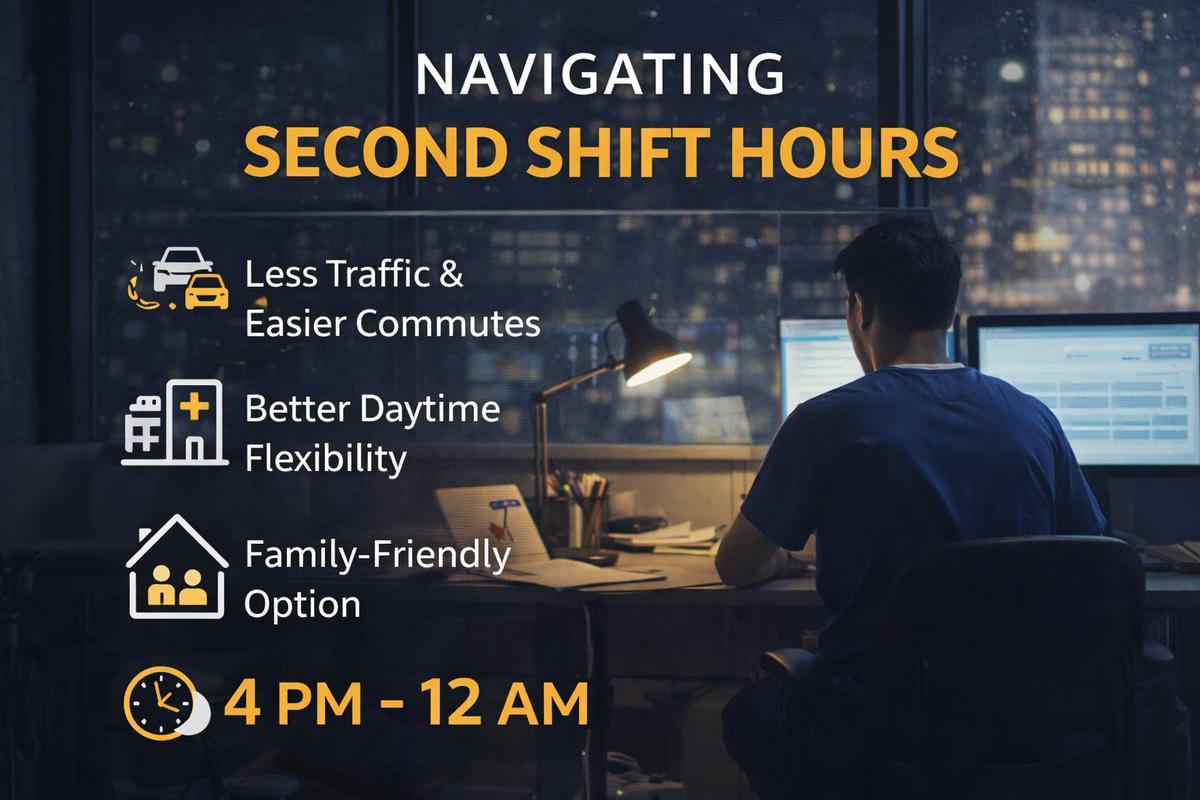
Second shift generally covers the late afternoon through late evening, most often starting between 4:00 p.m. and 6:00 p.m. and ending around 12:00 a.m. or 1:00 a.m.
This schedule sits between the traditional day shift and overnight work. It appeals to people who prefer slower mornings, want daytime flexibility, or need to balance work with education, family, or personal commitments.
Common Work Shift Types Explained
Work schedules vary widely depending on the employer and industry. Here are the most common shift structures you’ll encounter:
-
First Shift (Day Shift): Usually runs from 8:00–9:00 a.m. to 5:00–6:00 p.m.
-
Second Shift (Evening Shift): Typically spans 4:00 p.m. to midnight
-
Third Shift (Night Shift): Covers overnight hours, often from 12:00 a.m. to 8:00 a.m.
-
Split Shift: Divides the workday into two separate time blocks
-
Weekend Shift: Concentrates hours on Saturdays and Sundays
-
Fixed Shift: Offers consistent hours and days each week
-
Rotating Shift: Alternates between shift types on a set schedule
Understanding these options helps you choose a schedule that supports both your productivity and well-being.
Why Workers Choose Second Shift
Second-shift hours aren’t just a compromise—they offer real advantages for many workers.
Less Traffic and Easier Commutes
Evening shifts often begin after peak rush hours, making commutes faster and less stressful.
Better Daytime Flexibility
Mornings are free for appointments, errands, studying, or personal projects—tasks that are harder to manage with a traditional schedule.
Family-Friendly for Some Households
For parents, second shift can mean being available during school hours and sharing childcare responsibilities more efficiently.
Quieter Work Environment
Many evening shifts experience fewer meetings, less supervision, and reduced workplace noise—allowing for greater focus.
Is Second Shift the Right Fit for You?
Second-shift work isn’t ideal for everyone. Before committing, consider the following:
-
Sleep Routine: You’ll need a consistent post-shift wind-down plan to avoid fatigue
-
Social Schedule: Evening hours may require adjusting how and when you socialize
-
Career Goals: Ask whether promotions and training opportunities are equally accessible across shifts
-
Workload Expectations: Some industries experience peak demand during evening hours
Asking these questions upfront can prevent burnout and help ensure long-term satisfaction.
Frequently Asked Questions About Second Shift Work
What hours define second shift?
Most second shifts run from 4–5 p.m. to 12–1 a.m., though exact times depend on the employer and industry.
Is second shift bad for your health?
Not necessarily. Maintaining a consistent sleep schedule, managing light exposure, and prioritizing rest can help you adjust successfully.
Can you maintain a social life on second shift?
Yes—with planning. Many second-shift workers socialize in the mornings, on days off, or by coordinating schedules in advance.
Can second-shift employees get promoted?
Absolutely. Many employers value reliability on evening shifts, and strong performance can lead to advancement just as it does on day shifts.
Final Thoughts
Second-shift hours offer flexibility, quieter work environments, and opportunities across many industries. For people who prefer evenings over early mornings, this schedule can provide both stability and work-life balance.
With the right routine and expectations, second shift isn’t a limitation—it can be a strategic career choice.


