
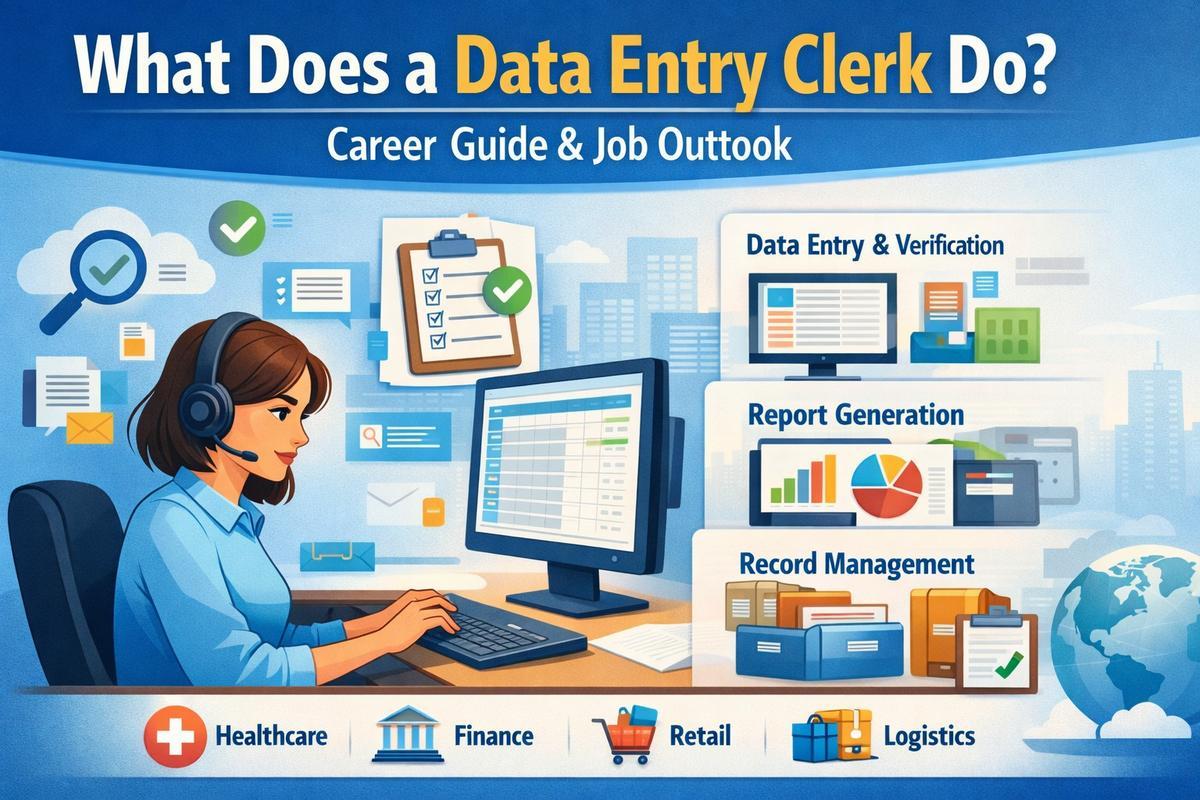
What Does a Data Entry Clerk Do? Career Guide, Skills & Job Outlook
In today’s digital economy, data is one of the most valuable assets a company owns. Behind every organized database, accurate report, and smooth workflow stands a professional ensuring information is entered correctly — the data entry clerk.
If you’re exploring administrative careers or looking for an entry-level office job, understanding this role can help you decide whether it’s the right path for you.
What Is a Data Entry Clerk?
A data entry clerk is responsible for inputting, updating, verifying, and maintaining information within computer systems and databases. While the job may seem simple, it requires precision, consistency, and strong attention to detail.
Data entry clerks ensure that business data remains:
-
Accurate
-
Organized
-
Up to date
-
Easily accessible
From healthcare records to financial transactions and inventory tracking, their work directly supports decision-making and operational efficiency.
Key Responsibilities of a Data Entry Clerk
1. Data Input and Updates
Entering information from paper documents, emails, spreadsheets, or digital forms into internal systems.
2. Data Verification
Cross-checking information for accuracy and correcting discrepancies.
3. Record Maintenance
Keeping databases organized and properly structured for easy retrieval.
4. Report Preparation
Generating summaries and reports based on stored data.
5. Administrative Support
Assisting departments such as HR, finance, marketing, or operations with data-related tasks.
How to Become a Data Entry Clerk
Starting a career as a data entry clerk is accessible compared to many other professions.
Step 1: Understand the Role
Research job descriptions to learn daily tasks and required skills.
Step 2: Improve Typing Speed
Aim for at least 50–70 words per minute with high accuracy.
Step 3: Learn Office Software
Gain proficiency in:
-
Microsoft Excel
-
Google Sheets
-
Database systems
-
CRM platforms
Step 4: Take Online Courses
Short certifications in data management or administrative support can strengthen your resume.
Step 5: Build a Strong Resume
Highlight:
-
Typing speed
-
Software knowledge
-
Attention to detail
-
Administrative experience
Step 6: Apply for Entry-Level Positions
Search for:
-
Remote data entry jobs
-
Part-time data entry roles
-
Entry-level office clerk jobs
Types of Data Entry Clerk Roles
The title may vary depending on the organization. Common variations include:
Data Input Specialist
Focused primarily on entering high volumes of information into systems.
Records Administrator
Responsible for organizing and managing digital and physical records.
Quality Control Data Clerk
Reviews data accuracy and corrects inconsistencies.
Data Management Assistant
Supports workflow optimization and data processes.
Reporting Clerk
Transforms raw data into structured reports for managers.
Customer Data Clerk
Maintains and updates client information databases.
Essential Skills for Data Entry Clerks
Success in this role requires both technical and soft skills.
Typing Accuracy and Speed
Efficiency matters, but precision is critical.
Attention to Detail
Even minor errors can impact financial records or client data.
Software Proficiency
Knowledge of Excel, spreadsheets, CRM systems, and database tools is essential.
Time Management
Handling multiple deadlines effectively.
Communication Skills
Collaborating with team members and clarifying information when needed.
Problem-Solving
Resolving data inconsistencies or technical issues.
Organizational Skills
Maintaining clean and structured records.
Adaptability
Learning new tools and adjusting to workflow changes.
Tools Commonly Used by Data Entry Clerks
Modern data entry professionals rely on various tools to maximize efficiency:
-
Microsoft Excel
-
Google Sheets
-
CRM systems
-
Database Management Systems (DBMS)
-
Optical Character Recognition (OCR) software
-
Accounting software
-
Project management tools
-
Communication platforms
Technology continues to streamline repetitive tasks, increasing productivity and reducing manual errors.
Industries Hiring Data Entry Clerks
Data entry roles exist across nearly every industry:
Healthcare
Managing patient records and billing information.
Finance and Banking
Processing transactions and maintaining account data.
Retail and E-commerce
Tracking inventory and sales data.
Education
Maintaining student records and enrollment databases.
Government Agencies
Managing public records and administrative data.
Human Resources
Handling payroll and employee documentation.
Marketing Departments
Managing customer data and campaign analytics.
Logistics and Supply Chain
Tracking shipments and inventory systems.
Salary and Job Outlook
Data entry positions are often entry-level roles, making them ideal for:
-
Career starters
-
Career changers
-
Remote job seekers
-
Administrative professionals
With the rise of remote work, many companies now offer remote data entry jobs, increasing flexibility and accessibility.
Frequently Asked Questions
What should I include in a data entry clerk resume?
Highlight typing speed, attention to detail, software skills, and any administrative experience.
Is data entry a good entry-level career?
Yes. It provides office experience and can lead to roles in administration, operations, or data management.
Can data entry jobs be done remotely?
Many companies offer remote data entry positions, especially for digital record management.
What typing speed is required?
Most employers expect at least 50–60 words per minute with strong accuracy.
Do I need a degree?
Typically, a high school diploma is sufficient, though additional certifications can improve job prospects.


