
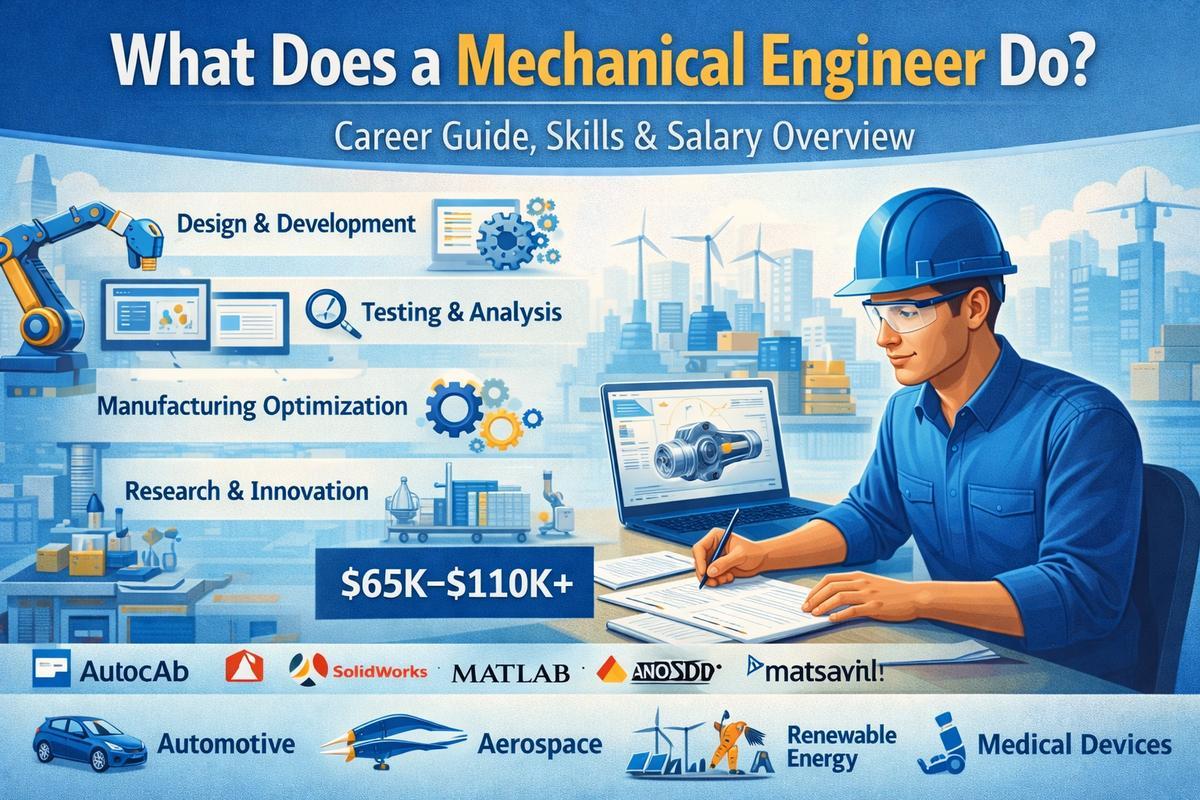
What Does a Mechanical Engineer Do? Career Guide, Skills & Salary Overview
Mechanical engineers are the innovators behind many of the systems and machines that power modern life. From automobiles and aircraft to robotics and renewable energy systems, they design, analyze, test, and improve mechanical devices that shape industries worldwide.
If you’re exploring engineering careers or considering mechanical engineering jobs, this guide explains responsibilities, required skills, tools, industries, and salary expectations.
What Is a Mechanical Engineer?
A mechanical engineer is a professional who applies principles of physics, mathematics, and materials science to design and manufacture mechanical systems.
They work on:
-
Engines and vehicles
-
Manufacturing equipment
-
HVAC systems
-
Robotics and automation
-
Aerospace systems
-
Medical devices
Mechanical engineering is one of the broadest engineering disciplines, offering opportunities across multiple industries.
Key Responsibilities of a Mechanical Engineer
1. Design & Development
Mechanical engineers create detailed designs using CAD software to develop new products or improve existing ones.
2. Testing & Analysis
They test systems under various conditions to ensure safety, durability, and efficiency.
3. Manufacturing Optimization
Engineers streamline production processes to reduce costs and increase productivity.
4. Research & Innovation
Many mechanical engineers work in R&D to develop new materials, energy-efficient systems, or automation solutions.
5. Cross-Functional Collaboration
They collaborate with electrical engineers, software developers, and project managers to deliver complete solutions.
How to Become a Mechanical Engineer
Step 1: Earn a Bachelor’s Degree
A degree in mechanical engineering or a related field is typically required.
Step 2: Gain Hands-On Experience
Internships and co-op programs provide practical training.
Step 3: Master Technical Tools
Develop proficiency in:
-
CAD software
-
Simulation tools
-
Engineering calculations
Step 4: Obtain Certification
In the U.S., passing the Fundamentals of Engineering (FE) exam is often the first step toward becoming a licensed Professional Engineer (PE).
Step 5: Continue Professional Development
Engineering evolves rapidly. Staying updated with new technologies is essential.
Types of Mechanical Engineering Roles
Design Engineer
Creates product blueprints and 3D models using CAD software.
Manufacturing Engineer
Optimizes production systems and factory workflows.
Thermal Engineer
Specializes in heat transfer and energy systems.
Project Engineer
Oversees project timelines, budgets, and coordination.
Quality Control Engineer
Ensures products meet regulatory and safety standards.
Research & Development Engineer
Develops innovative technologies and prototypes.
Essential Skills for Mechanical Engineers
Analytical Thinking
Solving complex engineering challenges.
CAD Proficiency
Creating accurate digital designs.
Problem-Solving
Addressing system failures and inefficiencies.
Project Management
Managing timelines and resources effectively.
Communication Skills
Explaining technical concepts clearly.
Creativity
Innovating new mechanical solutions.
Attention to Detail
Ensuring precision in design and manufacturing.
Team Collaboration
Working effectively in multidisciplinary teams.
Tools Used by Mechanical Engineers
Modern mechanical engineers rely on advanced software and technology:
-
CAD software (AutoCAD, SolidWorks, CATIA)
-
FEA software (ANSYS, Abaqus)
-
CAM software (CNC programming tools)
-
MATLAB & Simulink
-
3D printing technology
-
PLM systems
-
Precision measurement instruments
These tools help engineers design efficiently and reduce costly production errors.
Industries Hiring Mechanical Engineers
Mechanical engineers are in demand across diverse industries:
Automotive
Designing vehicles and electric mobility systems.
Aerospace
Developing aircraft and spacecraft components.
Renewable Energy
Engineering wind turbines and solar systems.
Robotics & Automation
Building automated manufacturing systems.
HVAC & Construction
Designing heating, cooling, and building systems.
Manufacturing
Improving factory production processes.
Medical Devices
Developing prosthetics and medical equipment.
Defense & Military
Designing advanced defense technologies.
Mechanical Engineer Salary in the US
Mechanical engineering offers strong earning potential.
-
Entry-level: $65,000 – $75,000 per year
-
Mid-career: $80,000 – $100,000 per year
-
Senior engineers: $110,000+ per year
Salary varies by industry, experience, and state.
Frequently Asked Questions
What should a mechanical engineer resume include?
Technical skills, software proficiency, project experience, certifications, and measurable achievements.
Is a license required?
A Professional Engineer (PE) license is required for certain advanced roles and public projects.
Is mechanical engineering a good career?
Yes. It offers high salary potential, job stability, and opportunities in many industries.
What skills are most important?
Analytical thinking, CAD proficiency, problem-solving, and project management.