
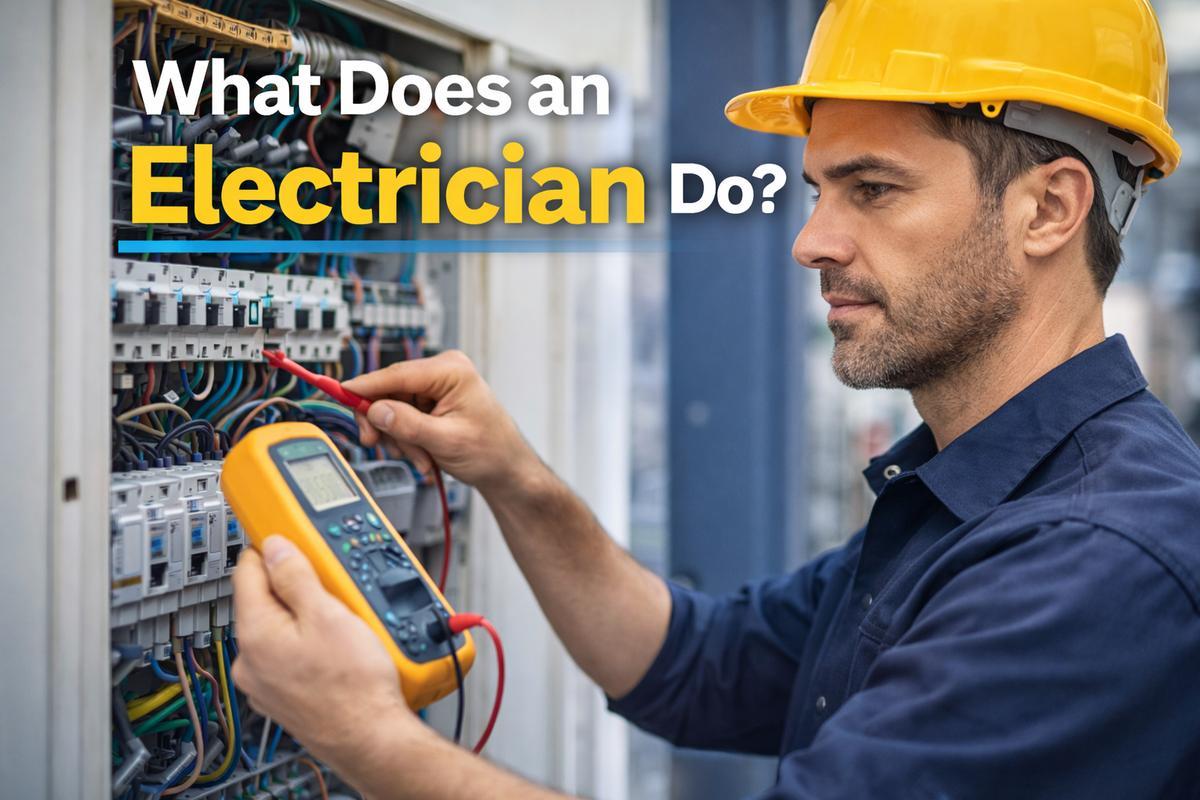
What Does an Electrician Do?
Have you ever stopped to think about what keeps the modern world running? Behind every illuminated home, functioning office, and powered industrial facility stands a skilled electrician. Electrician jobs are essential to maintaining the infrastructure that supports everyday life.
Electricians are responsible for installing, maintaining, and repairing electrical systems in residential, commercial, and industrial environments. Their duties range from wiring new construction projects to diagnosing complex electrical faults and upgrading outdated systems to meet safety codes.
This profession requires a strong combination of technical knowledge, hands-on skill, and critical thinking. Electricians must understand electrical blueprints, follow strict safety regulations, and troubleshoot issues quickly to prevent hazards.
Whether they are:
-
Installing circuit breakers
-
Repairing faulty wiring
-
Upgrading electrical panels
-
Setting up lighting systems
-
Maintaining industrial machinery
their work ensures that power flows safely and reliably.
In a world increasingly dependent on electricity — from smart homes to renewable energy systems — electricians play a critical role in keeping society operational. Without them, businesses would halt, homes would go dark, and essential services would be disrupted.
Essential Skills for Electricians
To succeed in electrician jobs, professionals must combine technical expertise with strong practical and interpersonal abilities. Electrical work is complex, highly regulated, and safety-sensitive — which means the right skill set is essential for long-term success in this career.
Below are the most important skills every electrician should develop.
1. Technical Knowledge of Electrical Systems
A strong understanding of electrical theory is fundamental. Electricians must know how:
-
Circuits function
-
Voltage and current interact
-
Electrical panels operate
-
Wiring systems are structured
This knowledge allows them to safely install, maintain, and repair electrical systems in homes, businesses, and industrial facilities.
2. Blueprint and Schematic Reading
Licensed electricians frequently work with electrical diagrams and construction blueprints. The ability to interpret wiring schematics ensures:
-
Accurate installations
-
Code-compliant work
-
Efficient troubleshooting
Without this skill, electrical systems cannot be installed correctly or safely.
3. Problem-Solving and Troubleshooting
Electrical systems can fail for many reasons — overloaded circuits, faulty wiring, outdated panels, or damaged components. Strong troubleshooting skills help electricians:
-
Diagnose electrical faults quickly
-
Identify root causes
-
Implement safe, effective solutions
Problem-solving is one of the most valuable electrician job requirements.
4. Attention to Detail
Electrical work leaves little room for error. Even minor mistakes can lead to:
-
Fire hazards
-
Equipment damage
-
Code violations
-
Serious injuries
A detail-oriented approach ensures compliance with safety regulations and building codes.
5. Knowledge of Electrical Codes and Safety Standards
Electricians must follow national and local electrical codes (such as the NEC in the U.S.). Understanding safety protocols is critical when working with high voltage systems.
This includes:
-
Lockout/tagout procedures
-
Proper grounding techniques
-
Safe equipment handling
-
OSHA safety standards
Safety awareness protects both the electrician and the client.
6. Physical Stamina and Dexterity
Electrician jobs are physically demanding. Professionals often:
-
Work in tight spaces
-
Climb ladders
-
Lift heavy equipment
-
Stand for extended periods
Good hand-eye coordination and manual dexterity are essential when handling wiring and tools.
7. Communication Skills
Electricians frequently interact with:
-
Clients
-
Contractors
-
Engineers
-
Inspectors
Clear communication ensures that project expectations are met and safety concerns are properly addressed.
8. Time Management and Organization
Many electricians manage multiple projects simultaneously. Efficient scheduling and organization help them:
-
Meet deadlines
-
Reduce downtime
-
Improve customer satisfaction
In competitive electrician careers, reliability and punctuality are highly valued.
9. Adaptability to New Technology
The electrical field is constantly evolving with innovations such as:
-
Smart home systems
-
Solar panel installations
-
Electric vehicle charging stations
-
Energy-efficient technologies
Modern electricians must stay updated on emerging technologies to remain competitive in the job market.
By mastering these essential electrician skills, professionals can build stable, high-paying careers in residential, commercial, or industrial electrical work.
Industries Hiring Electricians
Electrician jobs are in high demand across multiple sectors of the economy. As infrastructure expands and technology becomes more power-dependent, skilled electricians are essential to keeping systems operational and safe. Below are the top industries actively hiring electricians in the United States.
1. Residential Construction
The residential sector is one of the largest employers of electricians. Residential electricians work on:
-
New home wiring installations
-
Electrical panel upgrades
-
Lighting system installation
-
Smart home integration
-
Electrical repairs and troubleshooting
With ongoing housing development and home renovation trends, residential electrician jobs continue to offer steady employment opportunities.
2. Commercial Construction
Commercial electrician careers focus on office buildings, retail stores, schools, and hospitals. These projects often involve more complex electrical systems, including:
-
Large-scale wiring systems
-
Emergency backup generators
-
Security and fire alarm systems
-
Commercial lighting installations
Commercial electricians frequently collaborate with contractors and engineers on large projects.
3. Industrial and Manufacturing
Industrial electrician jobs are among the highest-paying roles in the field. These professionals work in factories, production plants, and manufacturing facilities, maintaining:
-
Heavy machinery
-
Motor control systems
-
Industrial automation systems
-
High-voltage equipment
With the rise of automation and robotics, skilled industrial electricians are increasingly in demand.
4. Energy and Utilities
Electricians play a critical role in power generation and distribution. The energy sector hires professionals for:
-
Electrical grid maintenance
-
Substation repairs
-
Renewable energy installations (solar and wind)
-
Power plant system maintenance
As renewable energy expands, solar electrician jobs and EV infrastructure roles are growing rapidly.
5. Government and Public Infrastructure
Federal, state, and local governments employ electricians for infrastructure projects such as:
-
Public buildings
-
Transportation systems
-
Military facilities
-
Water treatment plants
Government electrician jobs often offer stable employment and strong benefits packages.
6. Transportation and Aviation
Airports, rail systems, and shipping facilities rely on electricians to maintain complex electrical networks. Responsibilities may include:
-
Runway lighting systems
-
Rail signaling systems
-
Port and cargo facility electrical systems
This industry requires strict compliance with safety regulations and precision work.
7. Telecommunications
Electricians in the telecommunications sector help install and maintain:
-
Fiber optic systems
-
Communication towers
-
Data center electrical infrastructure
As digital connectivity expands, telecom electrician roles continue to grow.
8. Maintenance and Facility Management
Many corporations hire in-house electricians to handle ongoing maintenance of electrical systems in:
-
Office buildings
-
Hospitals
-
Universities
-
Shopping centers
These maintenance electrician jobs provide consistent work focused on repairs, inspections, and system upgrades.
Why Electrician Careers Are Growing
Several factors contribute to strong demand for electrician jobs:
-
Aging electrical infrastructure
-
Increased home renovations
-
Expansion of renewable energy
-
Growth in electric vehicle charging stations
-
Technological advancements
Electricians are considered essential trade professionals, making this career path highly stable and future-proof.
Electrician Salary in the US
One of the most common questions job seekers ask is: How much do electricians make in the United States? The answer depends on experience level, location, specialization, and industry sector.
Electrician careers are known for offering competitive wages, strong job stability, and growth potential without requiring a traditional four-year degree.
Average Electrician Salary in the US
As of recent labor market data:
-
Average annual electrician salary: $60,000 – $75,000
-
Average hourly wage: $28 – $36 per hour
However, pay can vary significantly depending on experience and state.
Salary by Experience Level
Entry-Level Electrician Salary
-
$40,000 – $50,000 per year
-
Typically apprentices or junior electricians
Licensed Journeyman Electrician
-
$55,000 – $75,000 per year
Master Electrician Salary
-
$80,000 – $100,000+ per year
-
Higher earnings possible with business ownership
Industrial electricians and those working in high-risk environments often earn above average wages.
Highest Paying States for Electricians
Electrician salaries vary based on cost of living, demand, and union presence. Some of the highest-paying states include:
-
California – $75,000 – $95,000
-
New York – $70,000 – $90,000
-
Illinois – $70,000 – $85,000
-
Washington – $75,000 – $92,000
-
Massachusetts – $72,000 – $88,000
Union electrician jobs in major metropolitan areas often offer premium wages and strong benefits.
Salary by Industry
Electrician pay also varies by sector:
-
Industrial & Manufacturing: $70,000 – $95,000
-
Energy & Utilities: $75,000 – $100,000+
-
Commercial Construction: $60,000 – $80,000
-
Residential Services: $50,000 – $70,000
-
Government & Infrastructure: $65,000 – $85,000
Renewable energy electricians and EV charging installation specialists are seeing rising salaries due to increased demand.
Job Outlook for Electricians
The demand for electricians is projected to grow steadily over the next decade due to:
-
Infrastructure upgrades
-
Expansion of renewable energy
-
Electric vehicle adoption
-
Smart home technology
-
Aging electrical systems
Electricians are considered essential trade professionals, making this career path recession-resistant and future-proof.
Can Electricians Earn Six Figures?
Yes. Electricians can earn $100,000+ annually by:
-
Becoming master electricians
-
Specializing in industrial or high-voltage systems
-
Working overtime or union contracts
-
Starting their own electrical contracting business
Self-employed electricians often significantly increase earning potential.
Why Electrician Careers Are Financially Attractive
Electrician jobs offer:
-
Competitive wages without student loan debt
-
Paid apprenticeships
-
Strong union representation
-
Overtime opportunities
-
Career advancement pathways
For individuals seeking stable, hands-on, and well-paying careers, becoming an electrician is one of the most practical trade professions available in the U.S.
Common Questions About Electrician Careers
Below are the most frequently asked questions from people exploring electrician jobs in the US.
How do I become an electrician?
To become an electrician, most candidates follow this path:
-
Earn a high school diploma or GED
-
Enroll in a trade school or technical program (optional but helpful)
-
Complete a paid apprenticeship (usually 4–5 years)
-
Pass the licensing exam to become a journeyman electrician
Many states require electricians to obtain a license before working independently. Apprenticeship programs allow you to earn income while learning the trade.
Do I need a degree to become an electrician?
No, a four-year college degree is not required for most electrician jobs. Instead, hands-on training and certification are the primary requirements.
Trade school programs can provide foundational knowledge in:
-
Electrical theory
-
National Electrical Code (NEC)
-
Blueprint reading
-
Safety standards
This makes electrician careers one of the highest-paying skilled trades without a traditional degree.
What certifications are required for electricians?
Requirements vary by state, but most electricians need:
-
State-issued journeyman license
-
Master electrician license (for advanced roles)
-
OSHA safety certification
-
Continuing education credits
For specialized roles, additional certifications may be required in areas like solar installation or industrial systems.
What should I include in my electrician resume?
A strong electrician resume should highlight:
-
Apprenticeship experience
-
Licensing and certifications
-
Electrical system installation projects
-
Troubleshooting and repair experience
-
Knowledge of safety regulations
If applying for entry-level electrician jobs, emphasize training, coursework, and hands-on practice.
What are common electrician interview questions?
When interviewing for electrician positions, employers may ask:
-
How do you diagnose electrical faults?
-
Describe a time you handled a safety issue.
-
How familiar are you with NEC codes?
-
Have you worked on commercial or industrial projects?
-
How do you ensure compliance with safety regulations?
Preparing detailed examples from previous projects will strengthen your interview performance.
How long does it take to become a licensed electrician?
Typically, it takes 4 to 5 years to complete an apprenticeship and qualify for a journeyman electrician license.
Advancing to master electrician status may require additional years of experience and passing advanced licensing exams.
Are electrician jobs in demand?
Yes. Electrician jobs are consistently in high demand due to:
-
Aging infrastructure
-
New residential construction
-
Renewable energy expansion
-
Electric vehicle charging installations
-
Smart home technology growth
This makes electrician careers one of the most stable trade professions in the US job market.
Can electricians work independently?
Yes. After obtaining the required licenses, electricians can:
-
Start their own electrical contracting business
-
Work as independent contractors
-
Take on residential or commercial projects
Self-employment can significantly increase earning potential.
Is electrician work dangerous?
Electrical work involves risks, but proper training, safety procedures, and protective equipment minimize hazards. Licensed electricians follow strict safety standards to reduce injury risk.
Safety awareness and compliance with regulations are core requirements in electrician careers.


