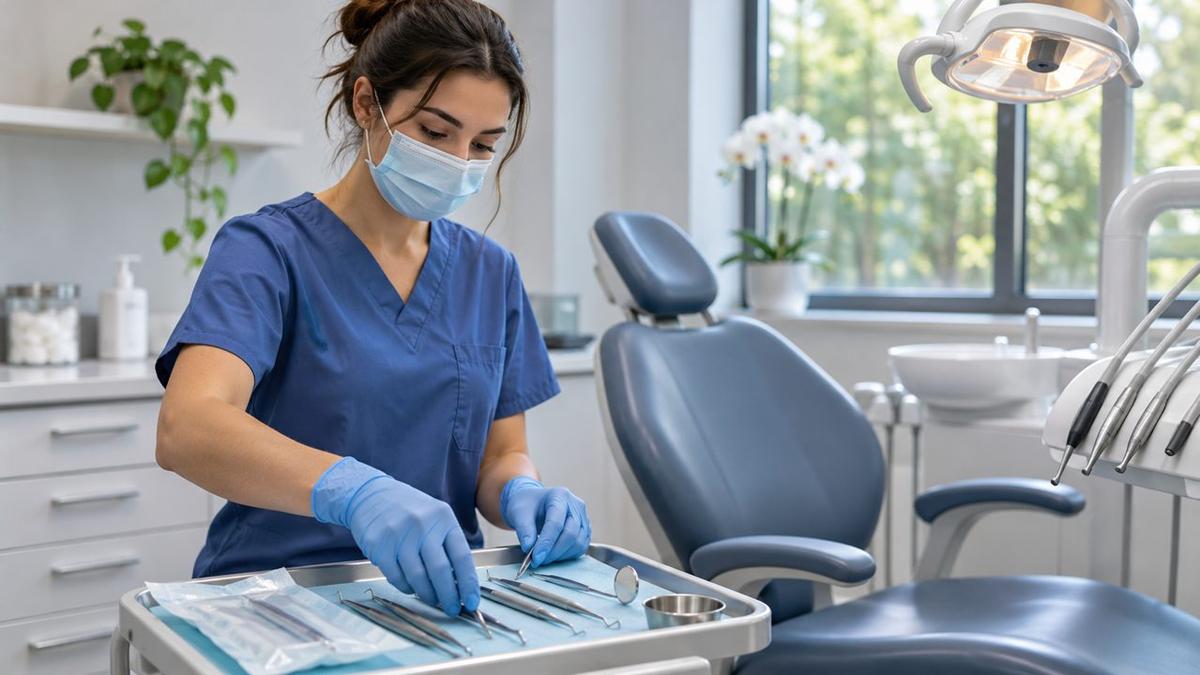

If you are weighing a fast route into healthcare, the phlebotomist salary is the first number to check, and the newest federal data gives a clear answer. According to the U.S. Bureau of Labor Statistics (BLS), phlebotomists earned a median of $45,230 a year, or $21.75 an hour, in May 2025. That is a solid figure for a job that usually requires a training program of less than a year. Below we break down what blood draw jobs pay by state and by employer type, what training and credentials you need, and how much demand the BLS expects over the next decade.
Phlebotomist Salary in 2026: The National Picture
The most recent wage data comes from the BLS Occupational Employment and Wage Statistics survey for May 2025, which the agency's Occupational Outlook Handbook now uses (the phlebotomist page was last updated on September 14, 2026). Here is how pay was spread across the occupation in that period:
- Median pay: $45,230 per year ($21.75 per hour).
- Lowest 10 percent: earned less than $35,780 per year.
- Highest 10 percent: earned more than $58,780 per year.
- Median for all U.S. occupations: $50,980 per year.
- Median for other healthcare support occupations: $46,180 per year.
In plain terms, the typical phlebotomist earns a little less than the typical American worker, and close to the middle of the healthcare support group. The gap between the bottom and top tenth is about $23,000, which tells you that location, employer and experience matter a lot. If you want to see how this compares with pay across the whole workforce, our breakdown of what full-time US workers earn now puts these numbers in context.
Pay by State: Where Blood Draw Jobs Pay More
State-level figures below come from the same May 2025 BLS wage data, as published on O*NET OnLine's local wage tool. We picked six large states that together cover very different labor markets. All figures are annual and cover May 2025.
| Location | Lowest 10% | Median | Highest 10% |
|---|---|---|---|
| California | $45,490 | $56,040 | $74,340 |
| New York | $37,930 | $50,530 | $63,070 |
| Washington | $39,410 | $48,880 | $64,080 |
| Texas | $32,570 | $40,450 | $53,560 |
| Florida | $35,560 | $40,230 | $48,190 |
| Ohio | $36,190 | $39,770 | $48,680 |
| United States | $35,780 | $45,230 | $58,780 |
Two things stand out. First, California is in its own league: even its lowest-paid tenth starts almost $10,000 above the national 10th-percentile figure. Second, the three lower-paying states in the table all have medians around $40,000, roughly $5,000 below the national figure. Keep in mind that a higher paycheck on the West Coast often comes with higher rent, so compare offers against your real monthly costs, not just the headline number.
Pay by type of employer
Where you work changes your pay almost as much as where you live. The BLS reports these May 2025 medians by industry, together with the share of all phlebotomist jobs each industry held in 2025:
| Industry | Median annual pay (May 2025) | Share of jobs (2025) |
|---|---|---|
| Outpatient care centers | $48,030 | 2% |
| Medical and diagnostic laboratories | $46,670 | 33% |
| Offices of physicians | $44,500 | 9% |
| Hospitals (state, local and private) | $44,220 | 36% |
| All other ambulatory healthcare services | $39,930 | 16% |
Hospitals and labs together employ more than two-thirds of the workforce, and their pay sits close to the national median. The best-paying setting, outpatient care centers, holds only a small slice of the jobs, so those openings are few and far between. At the other end, the catch-all group of other ambulatory services pays about $5,000 below the national median, which is worth knowing before you accept a first offer.
Worked Example: California vs. Texas Paychecks
Suppose two newly trained phlebotomists each land a job paying their state's median. Here is the arithmetic, using May 2025 BLS figures:
- California median: $56,040 per year. Divided by 12 months, that is $4,670 a month before taxes.
- Texas median: $40,450 per year, or about $3,371 a month before taxes.
- Annual gap: $56,040 minus $40,450 equals $15,590, or roughly $1,299 a month.
- Hourly check: the national median of $21.75 an hour multiplied by a standard 2,080-hour work year comes to $45,240, which matches the published annual median of $45,230 within rounding. You can use the same 2,080-hour rule to turn any hourly offer into an annual figure.
The California worker clearly earns more on paper. Whether they keep more depends on state income tax and housing costs, which vary widely between cities in both states. Use the gap as a starting point, then look at actual rent listings near the hospitals or labs you are targeting before deciding to relocate.
What Phlebotomists Do Day to Day
According to the BLS, the core of the job is drawing blood from patients or blood donors, but the work around each draw matters just as much. Typical duties include:
- Verifying the identity of each patient or donor before any sample is taken.
- Explaining the procedure to calm people who feel nervous about needles.
- Labeling collected blood and other samples, such as urine, and entering sample information into a database.
- Assembling, maintaining and safely disposing of needles, test tubes and vials.
- Keeping work areas and equipment clean and sanitary.
The BLS lists communication skills, compassion, attention to detail, dexterity, interpersonal skills and physical stamina as the qualities that matter most. A single mislabeled tube can send the wrong result to a doctor, so precision is not optional. Most phlebotomists work full time, and those in hospitals and labs may need to work nights, weekends and holidays.
Training, Certification and State Rules
The typical entry-level education for this occupation is a postsecondary nondegree award. According to the BLS, phlebotomy programs usually take less than one year to complete. Look for a program that includes supervised, hands-on practice, because certifying bodies may ask for clinical experience and a practical component.
Is certification required?
In most states there is no state license, but the BLS notes that employers may prefer candidates who hold a professional certification. Requirements depend on the certifying organization and can include education, clinical experience, a written exam and a practical component such as performing blood draws. Phlebotomists may also need Basic Life Support certification.
States with their own credential
A few states regulate the job directly, so check with your state licensing agency before you enroll. Washington is one example: the state Department of Health issues a Medical Assistant-Phlebotomist credential. Applicants must show they finished high school or its equivalent and submit proof of an approved phlebotomy training program, either through an accredited post-secondary school or college, or attested by a supervising health care practitioner who holds a current Washington license. If you are building a resume for these roles, list your credential number and clinical hours clearly; our free resume builder has a dedicated certifications section.
Job Outlook: Steady Demand Through 2035
The BLS projects employment of phlebotomists to grow 7 percent from 2025 to 2035, which it classifies as much faster than average. In numbers, the occupation is expected to rise from 143,900 jobs in 2025 to 153,700 in 2035, a gain of 9,800 positions. On top of that growth, the agency expects about 18,000 openings each year on average over the decade.
Two forces drive that demand, according to the BLS. A growing population with a rising share of older people needs more medical care, and blood analysis remains an essential part of diagnosing a wide range of conditions. That makes the role a steadier bet than many entry-level jobs, a point worth weighing if you read our latest look at slow hiring in the fall 2026 labor market.
Where the career can lead
Many people use phlebotomy as a first step. The BLS lists related occupations with higher median pay, including medical records specialists ($51,140) and clinical laboratory technologists and technicians ($62,930), the latter requiring a bachelor's degree. Medical assistants, with a May 2025 median of $45,690, work in a closely related role; our medical assistant career guide explains how that path works. When you are ready to apply, browse current openings on the ScrollJob job board.
FAQ: Phlebotomist Pay and Careers
How much does a phlebotomist make per hour?
The national median was $21.75 an hour in May 2025, according to the BLS. Pay is higher in states such as California and lower in states such as Florida and Ohio.
Which state pays phlebotomists the most?
Among the six states we compared, California had the highest median at $56,040 a year in May 2025, followed by New York at $50,530 and Washington at $48,880.
How long does it take to become a phlebotomist?
Most training programs take less than a year, according to the BLS. Add time for a certification exam if your employer or state expects one.
Do I need a license to draw blood?
It depends on the state. Most states have no specific license, but some, including Washington, issue their own credential. Employers anywhere may still prefer a certified candidate.
Is phlebotomy a good long-term career?
Demand is projected to grow 7 percent between 2025 and 2035, with about 18,000 openings a year. Many workers also use the job as a stepping stone toward laboratory or other clinical roles.
Do phlebotomists work nights and weekends?
Often, yes. The BLS notes that phlebotomists in hospitals and labs may need to cover nights, weekends and holidays, so ask about shift patterns before you accept an offer.
Conclusion
Phlebotomy offers a short path into healthcare with a national median of $45,230 a year and steady projected demand through 2035. Pay swings widely by state and employer, from around $40,000 in Texas, Florida and Ohio to more than $56,000 in California, so research your local market and any state credential rules before choosing a program. Pair a recognized certification with careful, patient-friendly work habits, and the job can become the first rung of a longer clinical career.
Sources: U.S. Bureau of Labor Statistics, Occupational Outlook Handbook, Phlebotomists (wage data May 2025, projections 2025–35, page updated September 14, 2026); O*NET OnLine local wages for Phlebotomists, 31-9097.00 (BLS 2025 wage data); Washington State Department of Health, Medical Assistant credentialing requirements.